Holidays to La Gomera
Overview
La Gomera is the most dramatically rugged and authentically Canarian of the central Canary Islands, a place where deep ravines, ancient laurel forests, and tiny whitewashed villages perched on seemingly impossible crags create a landscape unlike anywhere else in Europe. Without a single airport (it is reached exclusively by ferry from Tenerife), La Gomera has been spared the mass-tourism development that has transformed its neighbours, and its small-scale, nature-focused tourism is an integral part of its appeal. The island is perhaps best known beyond Spain for Silbo Gomero, a unique whistled language developed by its original inhabitants to communicate across the deep ravines that divide the island — UNESCO lists it as an Intangible Cultural Heritage of Humanity, and it is still taught in local schools. The capital, San Sebastián de La Gomera, played a pivotal role in history as Christopher Columbus's last port of call before he set sail for the Americas in 1492.
Beaches & nature
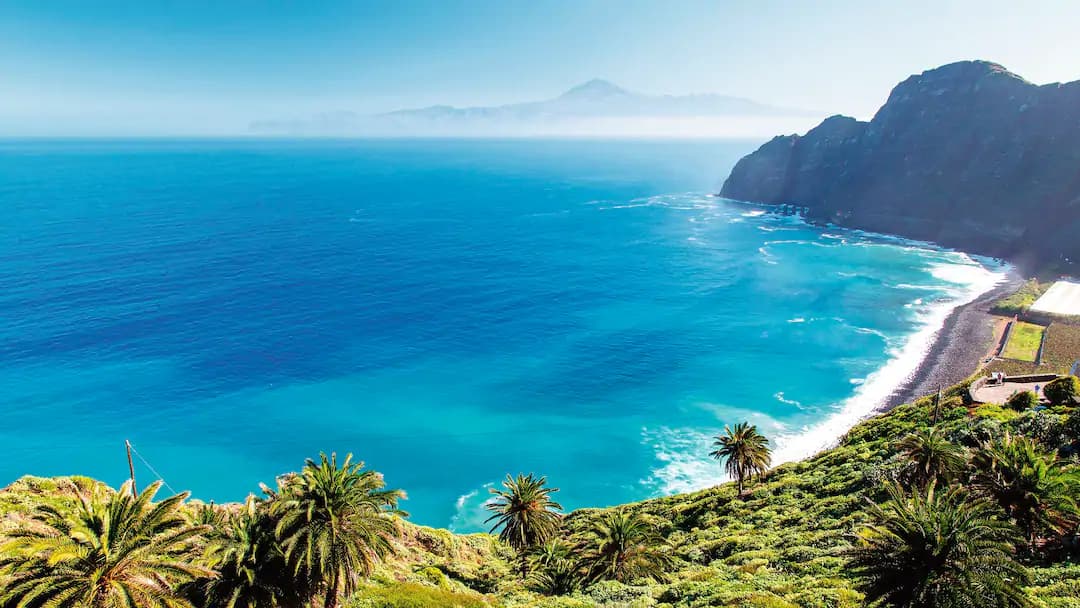
La Gomera's beaches are intimate, characterful, and rarely crowded. The capital's Playa de San Sebastián is a modest but pleasant black-pebble beach in a sheltered bay, ideal for a morning swim before exploring the town. Valle Gran Rey in the west houses the island's most popular beach area: a cluster of black-sand beaches at the foot of dramatic cliffs, with a laid-back village atmosphere that has attracted artists, writers, and free spirits for decades. Playa de Santiago in the south is a traditional fishing harbour with a calm shingle beach and excellent seafood restaurants. The island's true natural treasure, however, lies inland: Garajonay National Park, a UNESCO World Heritage Site, protects one of the world's largest remaining areas of ancient laurisilva forest, a relic ecosystem that once covered much of southern Europe millions of years ago. Gnarled laurel trees draped in moss and ferns give the park a primeval, almost enchanted quality.
Things to do
Hiking is the principal reason most visitors come to La Gomera, and the island's trail network is dense, well-maintained, and spectacular. The routes through Garajonay National Park are the highlight — the gentle Alto de Garajonay loop to the island's highest point (1,487 metres) is manageable for most walkers and rewards with views across the entire archipelago on clear days. The descent to Valle Gran Rey via the Barranco de Argaga is more demanding but offers extraordinary scenery. Whale and dolphin watching is exceptional in the waters around La Gomera — the channel between Tenerife and La Gomera is one of the richest cetacean habitats in Europe. San Sebastián offers a pleasant morning's walking with the Torre del Conde (a 15th-century defensive tower) and the Casa de Colón (where Columbus reportedly prayed before his voyage). A demonstration of Silbo Gomero at the local school or cultural centre is a genuinely memorable experience.
Eating & nightlife
La Gomera's food culture is deeply traditional and centred on locally grown produce. The island's most famous culinary export is almogrote, a rich, intensely flavoured spread made from matured cheese, peppers, garlic, and oil — now found across the archipelago but invented here. Miel de palma (palm syrup), extracted from the sap of the Canarian date palm, is another island speciality, used in desserts and to sweeten local brandy (mistela). In San Sebastián, the restaurants along the waterfront cater to a mix of ferry passengers and locals with honest, generous Canarian cooking. Valle Gran Rey has an eclectic, international dining scene reflecting its bohemian resident community, with excellent organic cafés and vegetarian options alongside traditional fish restaurants in the harbour. Nightlife is very low-key — a few bars, some live folk music, and conversations that go late rather than parties that go loud.
Getting around
La Gomera is accessed exclusively by ferry from Los Cristianos on Tenerife: Fred Olsen and Naviera Armas both operate services, with the fast Fred Olsen catamaran making the crossing in about 50 minutes. From Valle Gran Rey, a direct ferry service to Los Cristianos also operates on certain days. A hire car is the most practical way to explore the island's interior — the roads are winding and some sections of the older tracks are steep and narrow, but the scenery they reveal is extraordinary. Local buses connect San Sebastián with the main villages, but schedules are limited and do not cover all areas. Taxis are available in San Sebastián and Valle Gran Rey. Walking between villages is feasible on many of the old Caminos Reales (royal paths) that link the island's settlements, many of which predate the road network.
When to go
La Gomera enjoys a varied micro-climate due to its mountainous interior: the north-facing slopes and the forest interior are reliably cloudy and humid year-round, while the south and west can be sunny and warm even in winter. This contrast is part of the island's character — hikers in Garajonay often walk through mist, while beach-goers in Valle Gran Rey enjoy clear skies just an hour away. Spring and early summer (April to June) are the finest months for hiking, with the forest at its most lush and the paths clear after winter rains. The south and west coast beaches are best from June to October. Winter sun-seekers find Valle Gran Rey and Playa de Santiago reliably mild and pleasant. The island is never truly crowded, and there is no bad time to visit for those who enjoy peace and wild nature.
Most popular hotels in La Gomera
Our favourite hotels on the island of La Gomera