Holidays to Fuerteventura
Overview
Fuerteventura is the beach capital of the Canary Islands, and its extraordinary swathes of powder-white sand are the reason visitors keep returning year after year. The second-largest island in the archipelago lies just 100 kilometres from the African coast, and the proximity to the Sahara gives its landscape a raw, elemental beauty: vast rolling dunes, volcanic badlands, and endless horizons that make this feel like a different world from the busier islands to the east. While Fuerteventura may lack Tenerife's lush forests or Lanzarote's dramatic volcanic drama, it more than compensates with the longest and finest beaches in the Canaries — some stretching uninterrupted for more than 30 kilometres. The island has been a UNESCO Biosphere Reserve since 2009 and takes its natural heritage seriously, keeping development concentrated in specific resort areas and leaving vast stretches of coastline untouched.
Beaches & nature
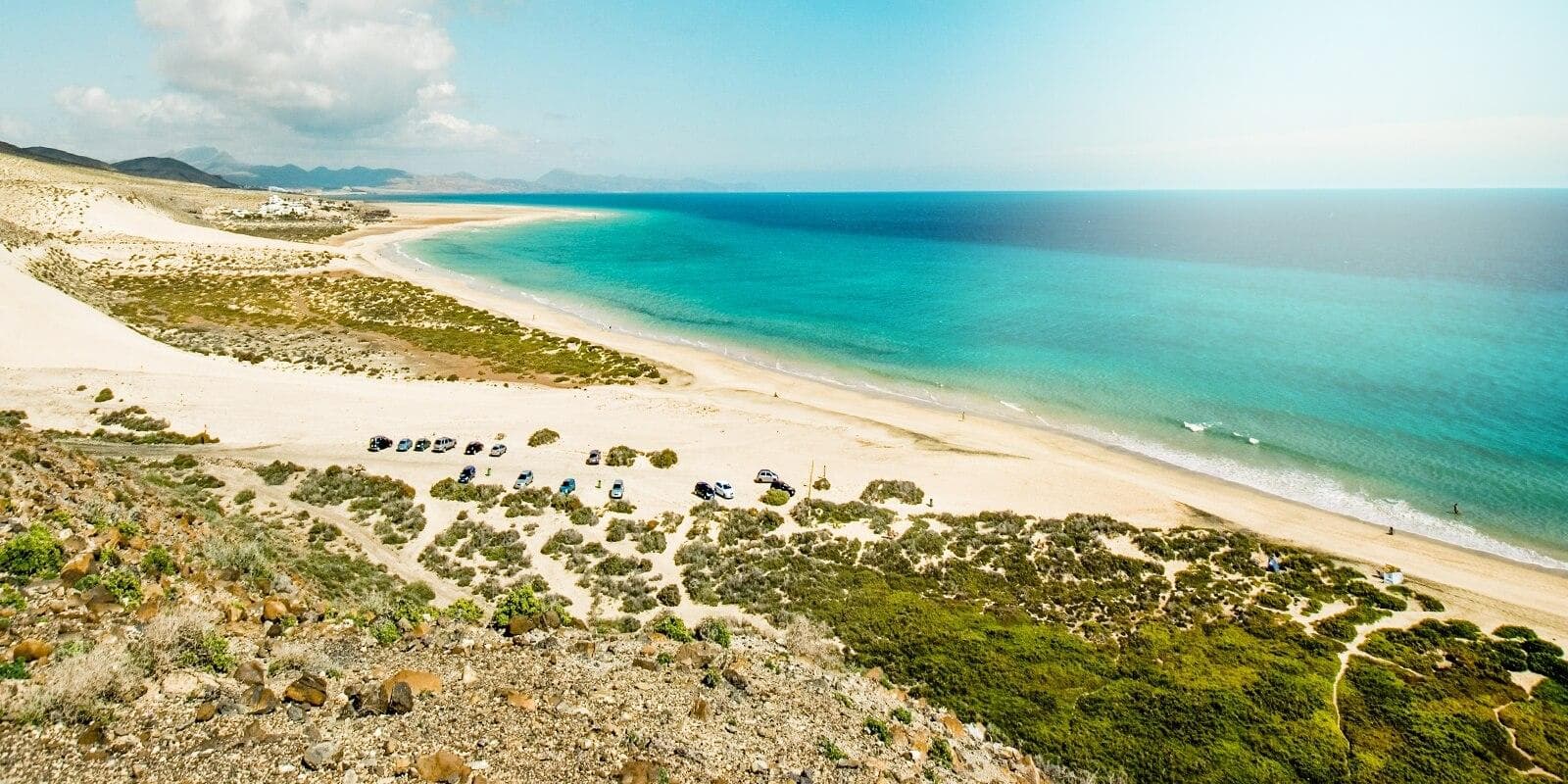
The undisputed centrepiece is the Parque Natural de Corralejo in the north: a protected natural area containing enormous shifting dunes, luminous turquoise lagoons, and pristine white-sand beaches stretching for over 10 kilometres. In the south, the Jandía Peninsula offers a 30-kilometre arc of white sand on the Atlantic-facing Barlovento coast, interspersed with sheltered coves on the calmer Sotavento side. Playa de Sotavento is world-famous for windsurfing and kitesurfing and has hosted World Cup events for decades. Costa Calma sits on a sheltered bay with calm, family-friendly waters. The volcanic interior is striking in its own way — the Malpaís de la Arena and the ancient volcanic plug of Montaña Cardón offer good hiking with panoramic views across the island's characteristic flat, wind-sculpted terrain.
Things to do
Watersports are the main event on Fuerteventura, and the island is among the world's premier destinations for windsurfing, kitesurfing, and surfing, particularly around El Cotillo and Corralejo. The sheltered lagoons of the Corralejo dunes are ideal for beginners learning to kite. For a change of pace, the historic inland town of Betancuria — the island's original capital, founded in 1404 — rewards a half-day visit with its baroque church, small archaeology museum, and tranquil plaza. The village of Ajuy on the west coast conceals caves carved into ancient sea cliffs that predate the Canary Islands' volcanic origins by millions of years. Boat trips from Corralejo to the uninhabited island of Lobos are excellent for snorkelling and birdwatching, with the island's pristine lagoon a protected marine habitat. Cycling is increasingly popular, with the flat terrain in the south making it accessible to most fitness levels.
Eating & nightlife
Fuerteventura is the home of the celebrated queso majorero, a tangy goat's cheese with PDO status that is produced across the island and available everywhere from supermarkets to fine-dining restaurants. Fresh fish — red sea bream, wreckfish, and octopus — is excellent at the small family restaurants lining the harbours in El Cotillo and Morro Jable. The resort areas of Corralejo and Jandía offer the most varied international dining scenes, with restaurants catering to every budget. Corralejo's old town has a relaxed strip of beach bars and restaurants popular with surfers and younger visitors, with live music most evenings in the high season. Morro Jable has a more local feel, with a good selection of Spanish tapas bars in the old fishing village below the main resort. Nightlife is generally laid-back compared to the bigger islands, with most activity centred around Corralejo's main square.
Getting around
Fuerteventura's main airport, Puerto del Rosario (FUE), sits on the eastern coast near the capital and is well served by direct flights from across Europe. Public buses operated by TIADHE connect the main towns and resorts but can be infrequent in rural areas and off-peak times. Hiring a car is strongly recommended if you want to explore beyond the main resort areas — roads are generally good, distances are manageable, and parking is rarely a problem outside the resort centres. The drive from Corralejo in the north to Morro Jable in the south takes around 90 minutes on the FV-2 highway. Taxis are available in all resort areas. A fast ferry service connects Corralejo to Playa Blanca on Lanzarote in about 25 minutes, and regular ferries link the island to Gran Canaria and Tenerife.
When to go
Fuerteventura enjoys the sunniest and driest climate in the Canaries, with rainfall so scarce that the landscape is essentially a semi-desert. Temperatures are warm and pleasant year-round, averaging around 20 °C in winter and 26 °C in peak summer. The constant trade winds make even the hottest months comfortable, but they also mean the island is rarely entirely still — which is excellent news for kitesurfers but can make relaxing on exposed beaches a little breezy. Spring and autumn are ideal for watersports, hiking, and sightseeing in equal measure. Summer is popular with families and beach-goers, and the sea reaches its warmest temperatures (around 23–24 °C) between August and October. The island is particularly appealing in winter for sun-seekers escaping northern European cold, with daytime temperatures in the low 20s.
Most popular hotels in Fuerteventura
Our favourite hotels on the island of Fuerteventura