Holidays to La Palma
Overview
La Palma, affectionately known as La Isla Bonita (the Pretty Island), is the greenest and most dramatically vertical of the Canary Islands. The entire island is a UNESCO Biosphere Reserve, a status it has held since 1983, and the landscape lives up to the distinction: towering cloud forests, deep volcanic ravines, lush banana plantations, and the colossal Caldera de Taburiente, one of the largest erosion craters on earth and the island's beating geological heart. The volcanic system of Cumbre Vieja in the south erupted spectacularly in 2021, a reminder that La Palma is one of the geologically youngest and most active islands in the archipelago. Recovery and regeneration are well underway, and the eruption has added a new layer of raw volcanic landscape to an already extraordinary island. La Palma rewards those willing to venture off the beaten track: its infrastructure is modest, its tourism industry deliberately small-scale, and the pace of life wonderfully unhurried.
Beaches & nature
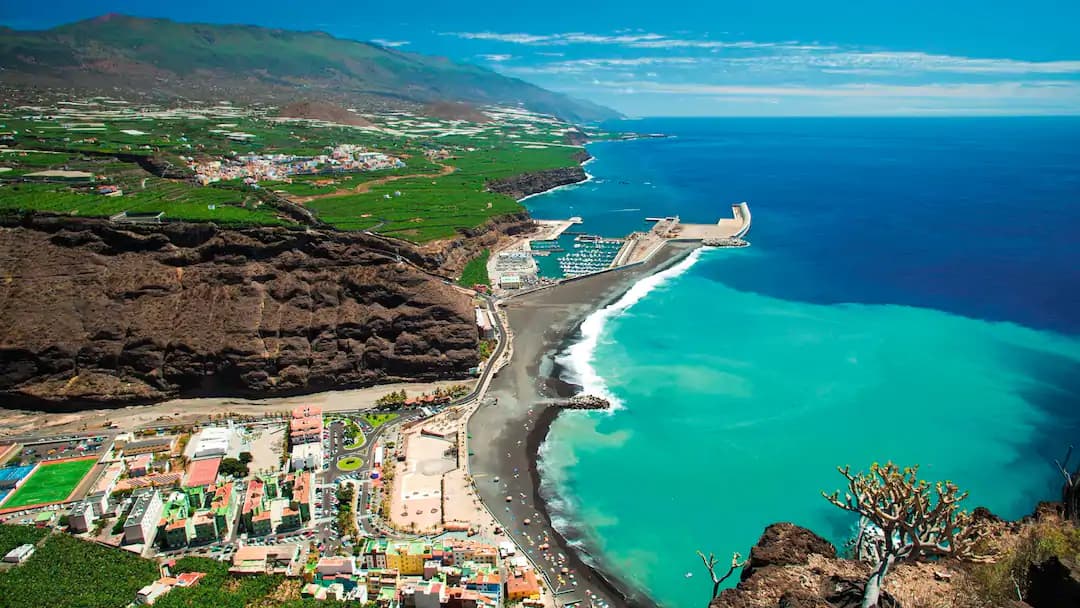
La Palma's coastline is defined by dramatic black volcanic sand and pebble beaches rather than the golden strands of the eastern islands. Los Cancajos, just south of the capital, is the most accessible beach resort, with calm, sheltered waters excellent for snorkelling over volcanic rock and small sandy bays. Puerto Naos on the west coast — reopened after access restrictions following the 2021 eruption — offers one of the island's longest black-sand beaches in a sheltered bay, with warm, clear water. The Caldera de Taburiente National Park is the island's natural highlight: a vast crater 8 kilometres wide and 1,500 metres deep, ringed by peaks and threaded with trails leading through pine forests and alongside cascading streams. La Palma is also the world's first Starlight Reserve, with the clarity of its night skies protected by law — the Roque de los Muchachos Observatory at 2,426 metres is among the most important astronomical research centres on the planet.
Things to do
Hiking is La Palma's principal activity, and the island's trail network is considered the finest in the Canaries. The GR130 long-distance route circumnavigates the island, taking about a week, while countless day walks lead through the caldera, along ridge-top balconies with views to neighbouring islands, or down vertiginous ravines to deserted coves. The capital, Santa Cruz de La Palma, is an architectural gem: its 16th-century historic centre is lined with ornate colonial mansions bearing elaborate wooden balconies, and the waterfront promenade is one of the most attractive in the archipelago. The Parque Cultural La Zarza showcases pre-Hispanic cave paintings and engravings left by the Benahoarita people, La Palma's original Guanche inhabitants. In the south, the still-steaming lava fields of the 2021 eruption around Todoque and Tazacorte are sobering and extraordinary in equal measure, accessible on guided tours.
Eating & nightlife
La Palma has a quietly excellent local food culture, rooted in its agricultural richness. The island produces superb mojo, particularly the almogrote variant made from matured cheese, and the local queso de La Palma — a semi-cured goat's cheese — is distinctive and widely available. Avocado, mango, papaya, and other tropical fruits grow here in abundance and appear on virtually every menu in season. The capital has a good selection of traditional tapas bars and restaurants along the Avenida Marítima, and the wine bars around the Plaza de España are excellent spots for tasting local Malvasía and Negramoll varietals. Tazacorte and Los Llanos de Aridane in the west both have lively local restaurant scenes. Nightlife is gentle and local in character — La Palma is not a party island, and most evenings revolve around relaxed dining, live folk music, and early nights.
Getting around
La Palma's airport (SPC), located a few kilometres north of Santa Cruz, receives direct flights from mainland Spain and Germany, and connecting flights via Gran Canaria or Tenerife from the UK and beyond. The island's roads are famously winding and steep — a hire car is virtually essential for exploring freely, but drivers should be comfortable with narrow mountain roads and hairpin bends. Public buses connect the main towns and villages but schedules can be infrequent, particularly in the rural south and west. The LP-1 coastal road links the capital to the southern and western resorts, though some sections are subject to delays due to post-eruption remediation work. Ferries connect La Palma to Tenerife (around 2.5 hours) and less frequently to the other western islands.
When to go
La Palma experiences a more variable climate than the eastern Canary Islands, with the green, mountainous interior catching significantly more cloud and rainfall than the drier western and southern coasts. The north is notably wetter and lusher than the south, which can be sunny while the north is misty. Spring (April to June) is outstanding for hiking — the vegetation is at its most vivid green, wildflowers are in bloom, and the caldera trails are at their most beautiful. Summer is warm and dry in the south and west. Winter brings some rain to the highlands but the coastal resorts remain pleasant. Stargazing is best on clear summer nights, particularly away from the coast and from August to October when the Milky Way is most prominent.
Most popular hotels in La Palma
Our favourite hotels on the island of La Palma