Holidays to Lanzarote
Overview
Lanzarote is the most visually distinctive island in the Canary Islands — a place where black lava fields, burning-orange volcanic cones, and emerald-green vineyards create a landscape that seems to belong to another planet. The island's unique character owes much to the visionary artist and architect César Manrique, whose lifelong campaign against overdevelopment ensured that Lanzarote became a UNESCO Biosphere Reserve in 1993. There are no high-rise buildings, no garish billboards, and no neon-lit strip malls — the island's development has been guided by a commitment to blending the built environment with the volcanic landscape. The interior is dominated by Timanfaya National Park, a protected wilderness covering over 50 square kilometres of hardened lava flows left by the catastrophic eruptions of 1730–36, which buried dozens of villages and reshaped the island's entire southern half. Lanzarote rewards curiosity: the more you look, the more extraordinary it becomes.
Beaches & nature
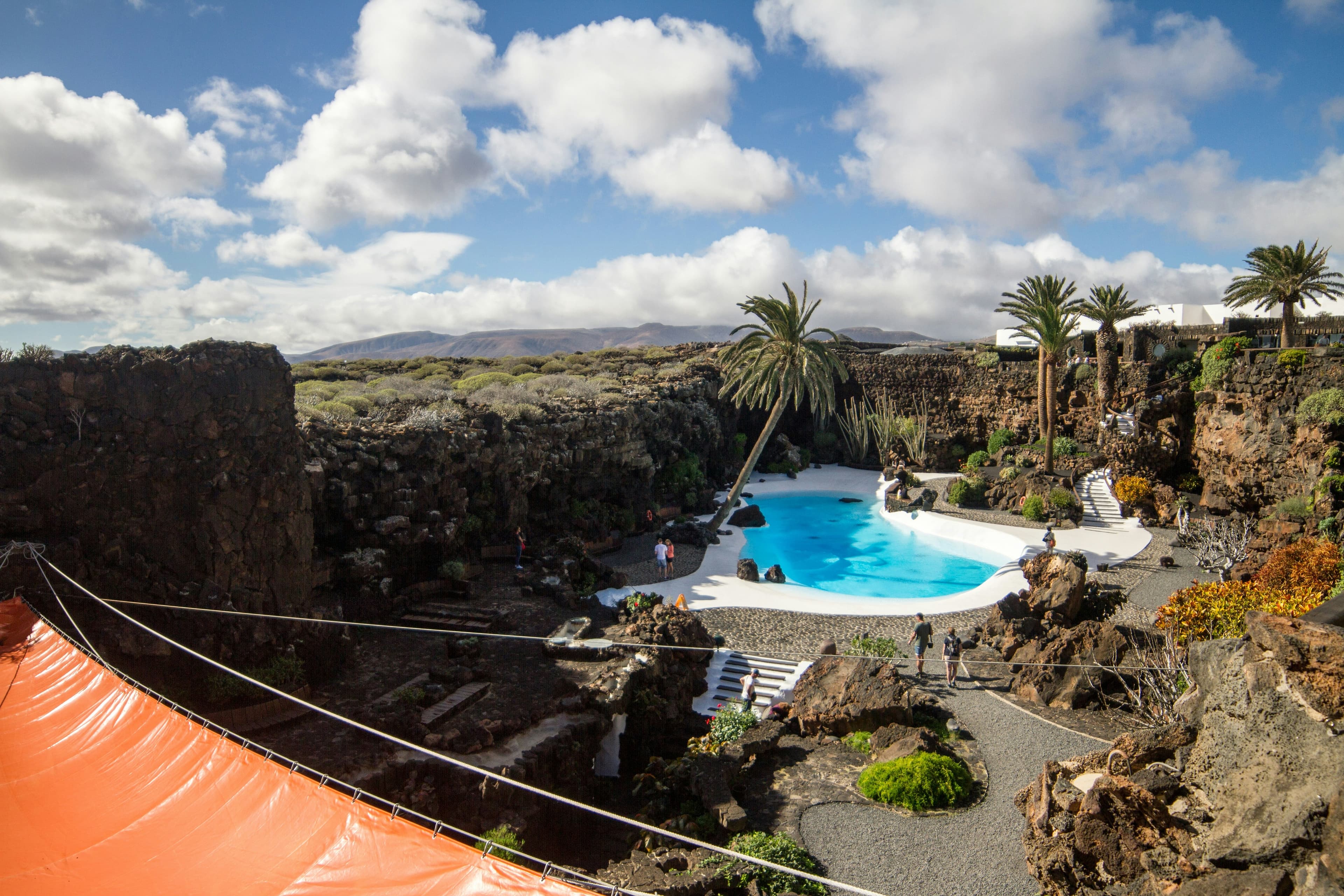
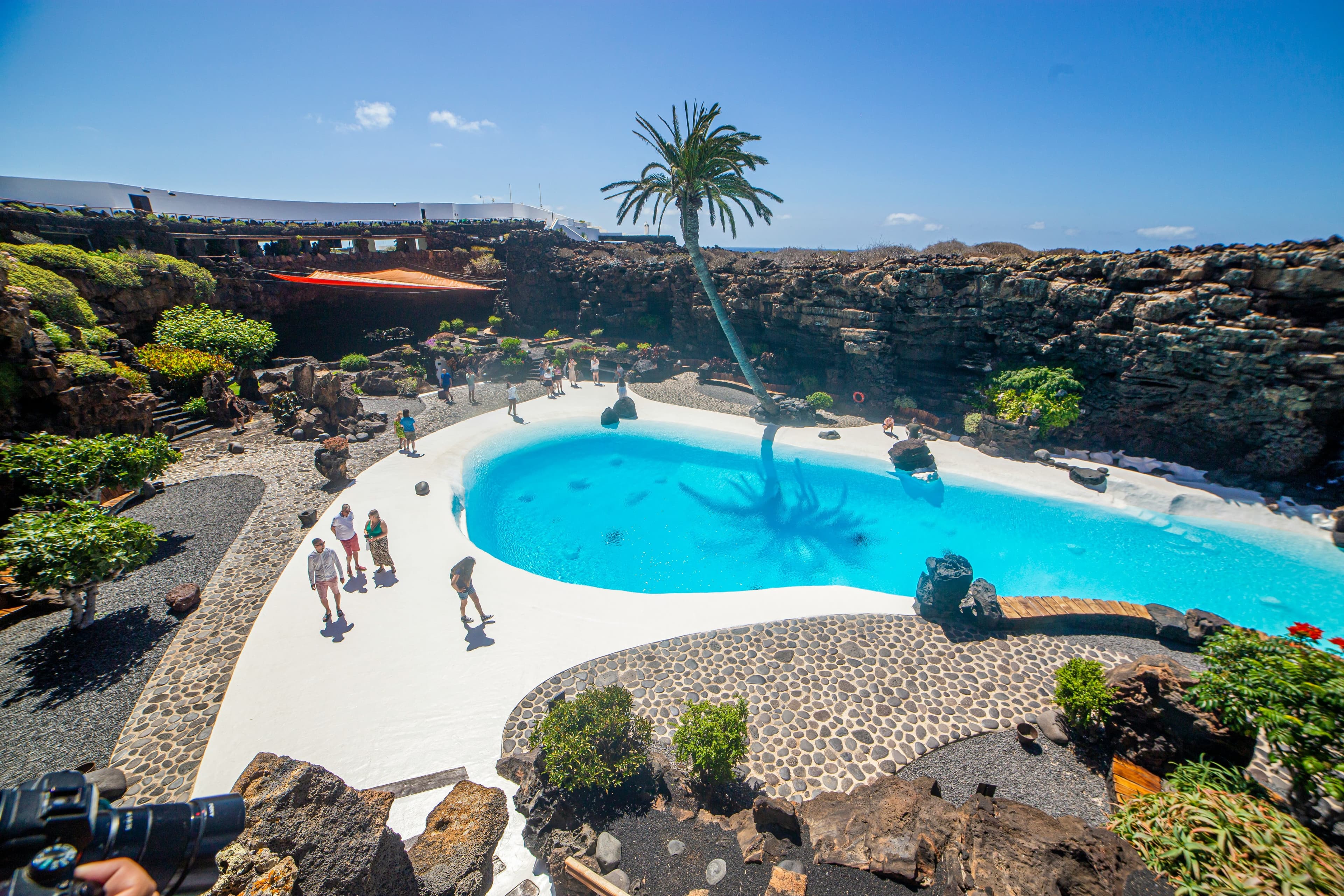
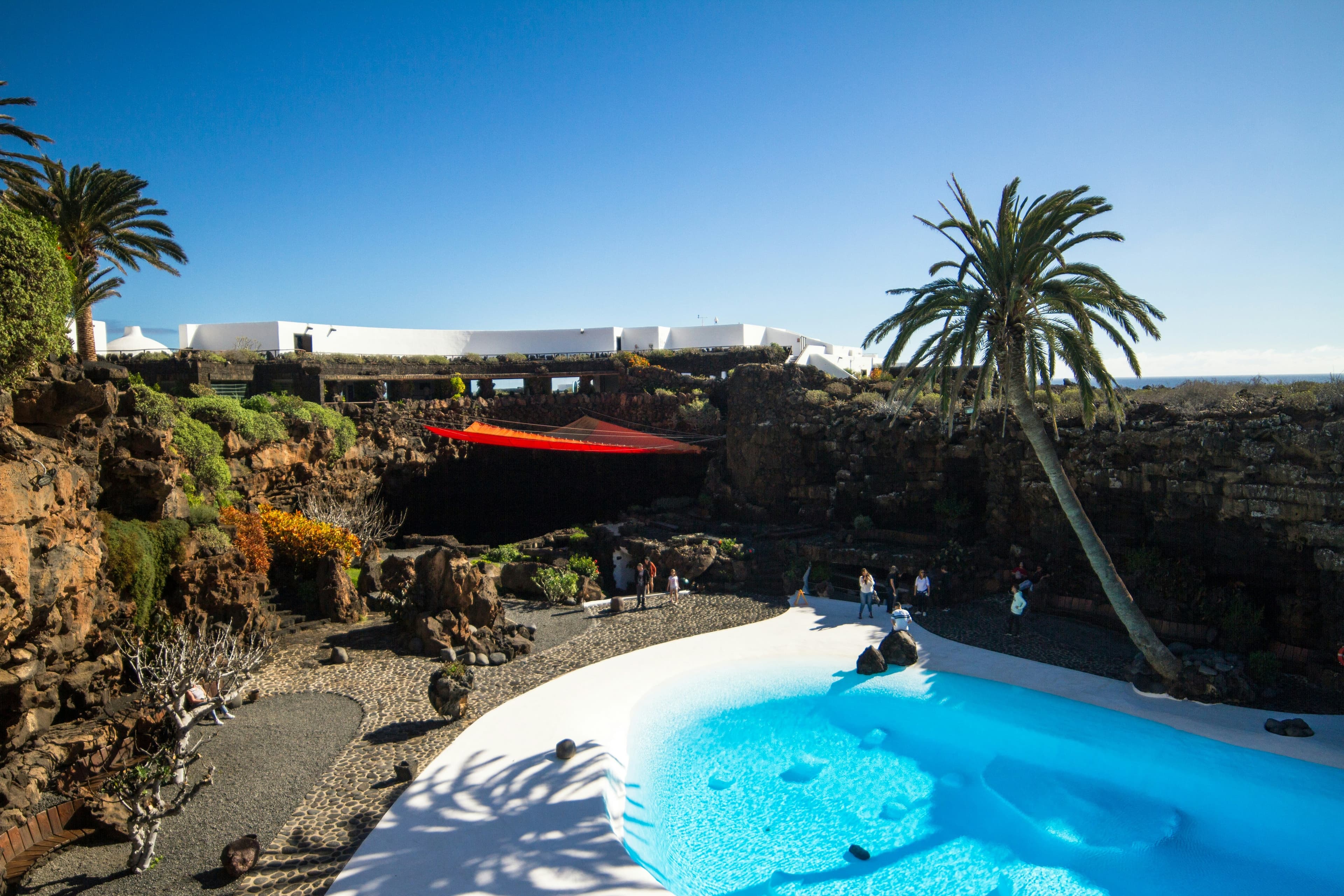
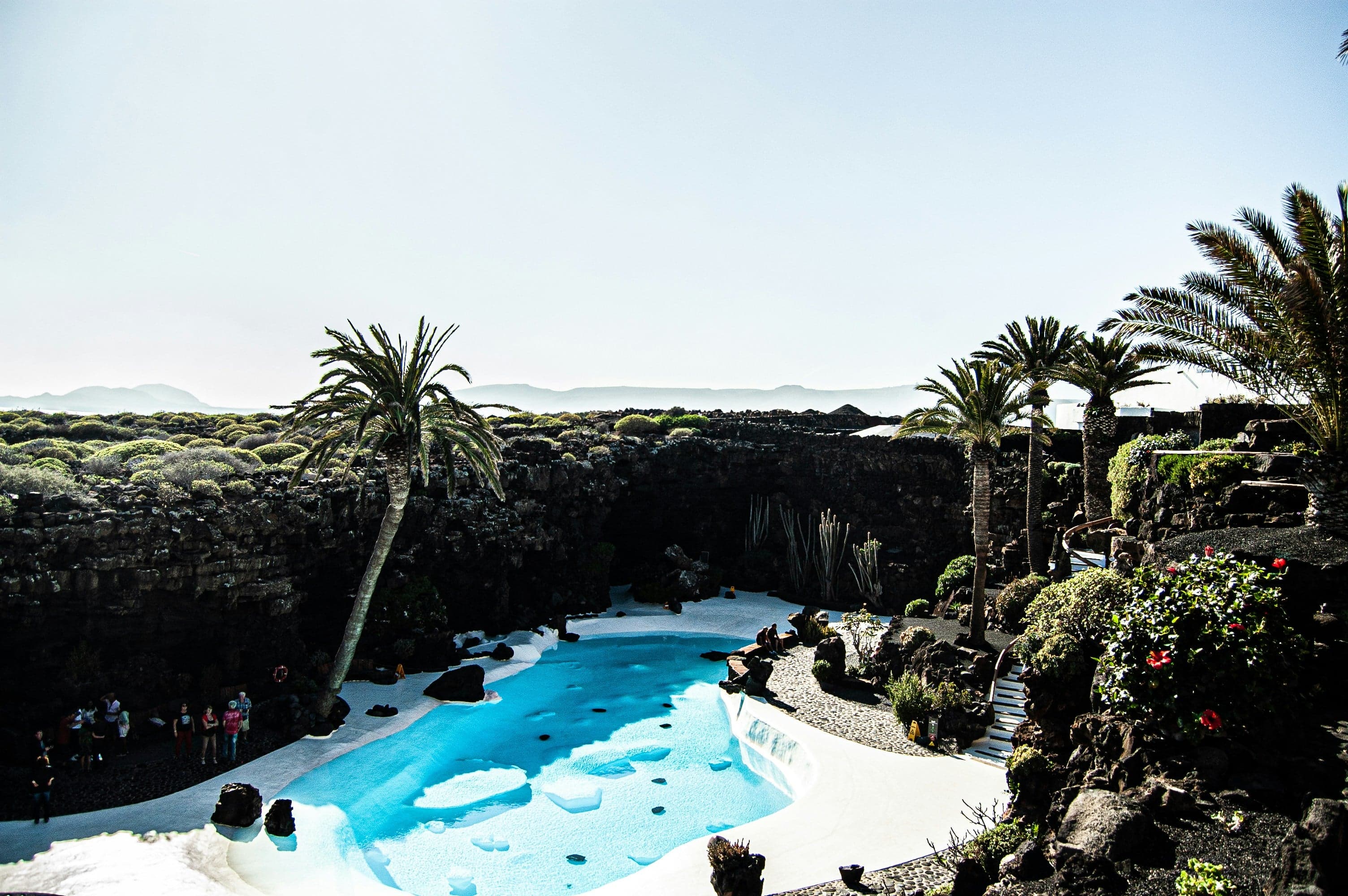
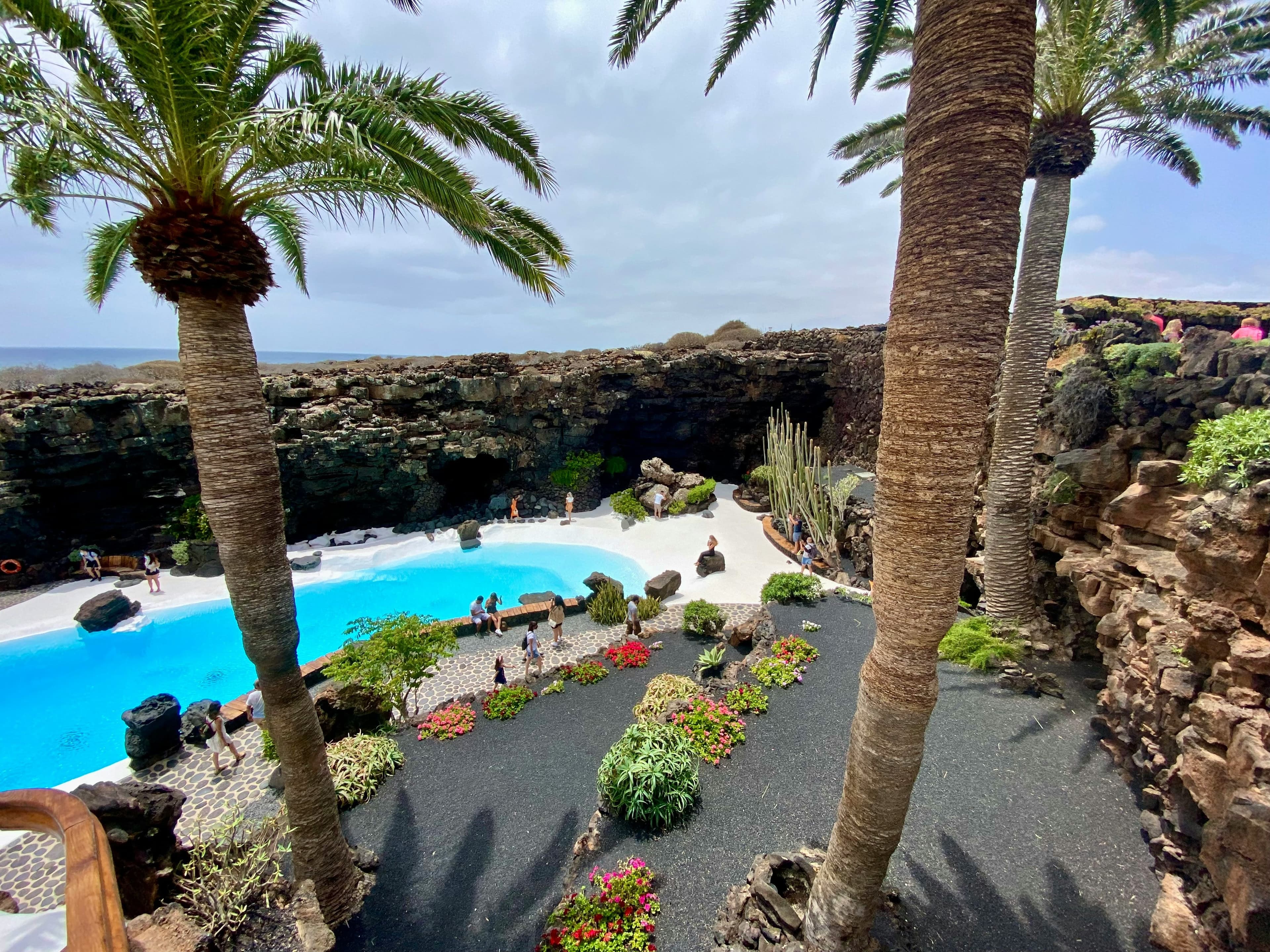
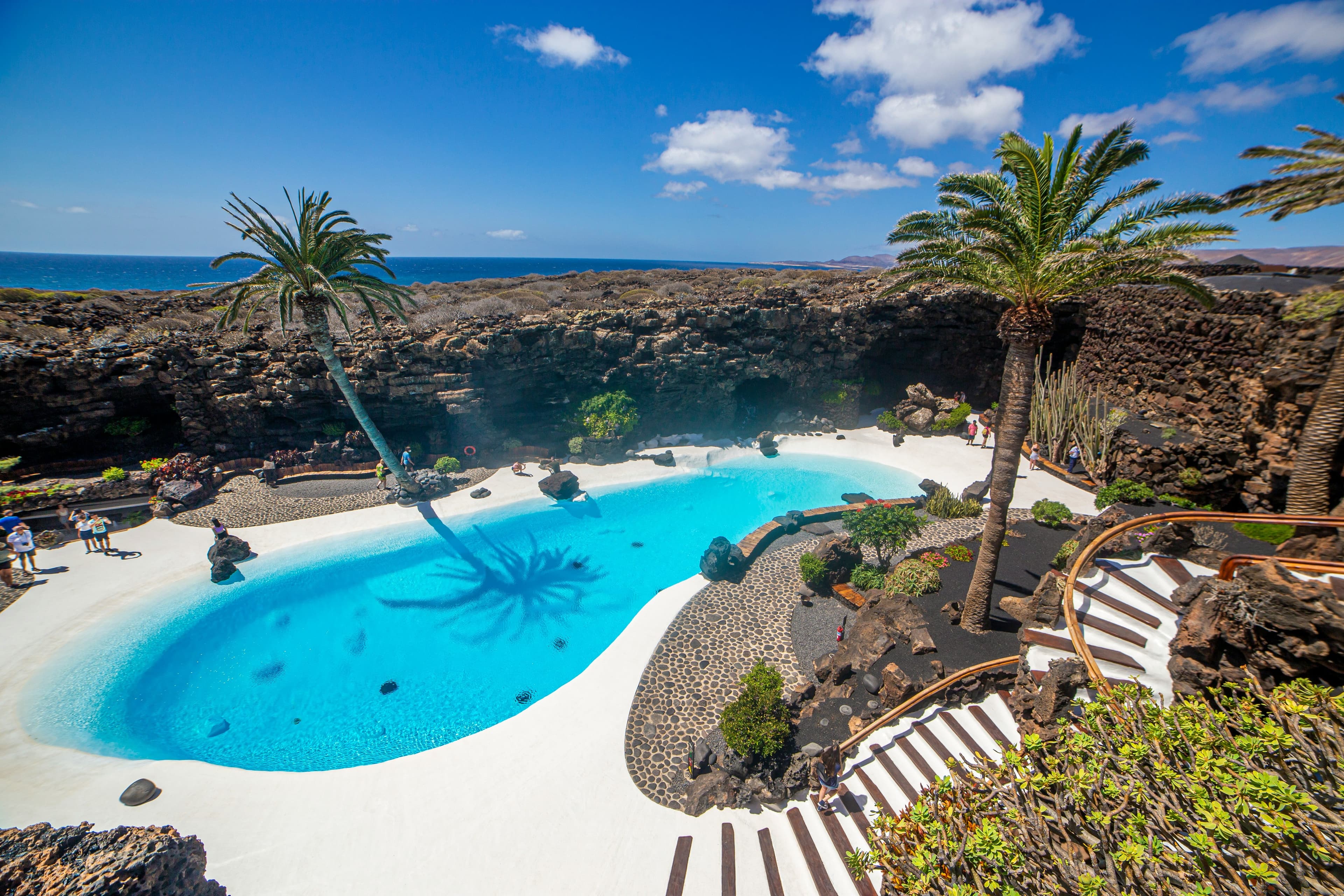
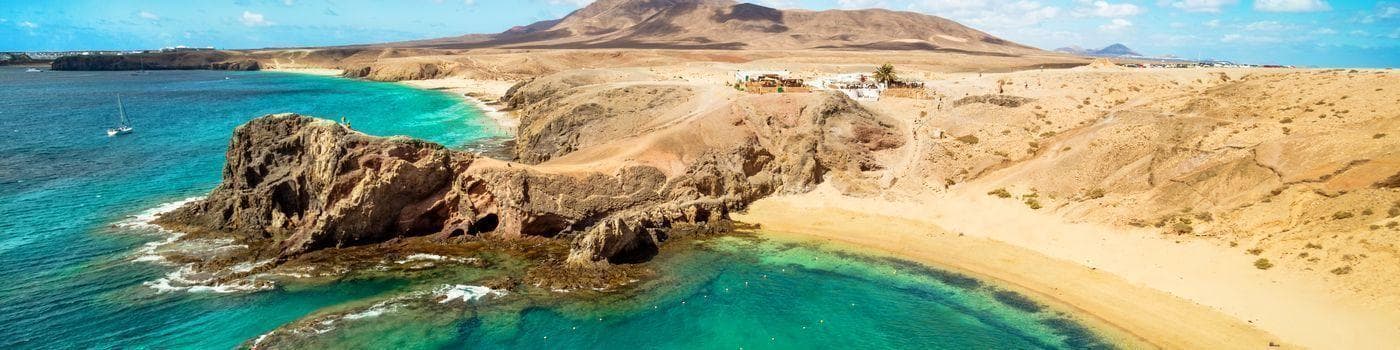
Despite its volcanic origins, Lanzarote offers a wonderful range of beaches. The most celebrated are the Playas de Papagayo in the south, a series of sheltered golden-sand coves accessible via a dirt track from Playa Blanca — some of the finest in the entire archipelago. Puerto del Carmen's broad Playa Grande is the island's most popular, offering calm, family-friendly waters and a promenade packed with restaurants and cafés. Costa Teguise has several smaller, sheltered beaches ideal for beginners learning to windsurf. On the west coast, El Golfo presents one of Lanzarote's strangest natural spectacles: a half-submerged volcanic crater whose lagoon has turned an extraordinary emerald green due to algae, backed by a black volcanic beach. The Jameos del Agua is another Manrique masterpiece — a series of caves and lava tunnels housing a unique species of blind, albino crab found nowhere else on earth.
Things to do
Timanfaya National Park is unmissable: guided bus tours wind through the most dramatic lava landscapes, where geothermal demonstrations — bushes ignited by heat trapped just below the surface — reveal just how close the volcanic fires still burn. The César Manrique Foundation in Tahíche occupies the artist's remarkable former home, built into a series of volcanic lava bubbles, and provides the definitive introduction to his philosophy and work. The Mirador del Río, perched 400 metres above the northern coast, offers a stunning panorama across the Chinijo Archipelago and the neighbouring island of La Graciosa. Wine tourism is a must in the La Geria region, where thousands of individual vines grow in hollowed-out volcanic pits (zocos) surrounded by low semicircular stone walls — an ingenious system for capturing moisture in near-desert conditions that produces exceptional Malvasía wines. Cycling, surfing near Famara, and boat trips to La Graciosa round out the activity list.
Eating & nightlife
Lanzarote's culinary scene is rooted in honest Canarian cooking, with fresh Atlantic fish at its heart. The small fishing villages of El Golfo, La Santa, and Arrieta each have excellent local restaurants serving the day's catch simply grilled with papas arrugadas and mojo. In Puerto del Carmen, the Avenida del Varadero — the old harbour strip — is lined with longstanding seafood restaurants with a genuine local clientele. The island's Malvasía wines, produced from grapes grown in volcanic lapilli, are excellent with food and widely available by the glass across the island. Timanfaya's volcanic restaurant at El Diablo cooks food on a grill powered entirely by geothermal heat — a unique experience worth the queues. Nightlife is centred on Puerto del Carmen's Avenida de las Playas, with bars and clubs catering mainly to a young British and Irish crowd, while Costa Teguise has a more relaxed evening scene.
Getting around
Lanzarote's airport (ACE), situated near Arrecife, receives direct flights from across Europe year-round. The island is compact enough to be explored thoroughly by hire car in a few days — distances are small, roads are well maintained, and the flat terrain makes driving straightforward. Public buses (Arrecifebus) connect the main towns and resort areas but are limited in frequency and coverage outside peak hours. Taxis are readily available in resort areas and can be pre-booked for longer trips into the interior. The fast ferry from Playa Blanca to Corralejo on Fuerteventura takes just 25 minutes and is a popular day-trip option, while longer ferry services connect to Gran Canaria and Tenerife. A small ferry from Orzola in the north reaches the unspoiled island of La Graciosa in about 20 minutes.
When to go
Lanzarote's arid climate and consistent sunshine make it one of the best year-round destinations in Europe. Winter temperatures rarely drop below 17 °C, and summer peaks stay below 30 °C in most areas, tempered by the ever-present trade winds. Rainfall is scarce throughout the year — Lanzarote is one of the driest places in all of Spain. The island is busiest in winter, when it fills with visitors seeking guaranteed sunshine, and during the peak summer weeks of July and August. Spring (March to May) is perhaps the finest season — temperatures are ideal for outdoor activities, the Timanfaya colours are vivid, and crowds are manageable. September and October bring the warmest sea temperatures and a calm, golden-light quality to the landscape that photographers particularly prize.
Most popular hotels in Lanzarote
Our favourite hotels on the island of Lanzarote